
The Role of 3D Rendering in Property Presales: Unlocking 3d Rendering Benefits for Sales

In the evolving landscape of real estate marketing, the power of visualization has never been more critical. As properties become more complex and buyers more discerning, the ability to present a project in its full glory before construction even begins is invaluable. This is where 3D rendering steps in, transforming abstract blueprints into vivid, immersive experiences. The role of 3D rendering in property presales is not merely a technological advancement; it is a strategic asset that bridges imagination and reality, enabling developers and architects to communicate their vision with clarity and confidence.
Exploring 3d Rendering Benefits for Sales
The benefits of 3D rendering for sales extend far beyond simple aesthetics. For real estate developers and architects, these digital models serve as a dynamic sales tool that can significantly accelerate decision-making and enhance buyer engagement. Unlike traditional 2D plans or static images, 3D renderings offer a comprehensive view of the property, including spatial relationships, lighting, textures, and even landscaping.
Some of the key advantages include:
Enhanced Visualization: Buyers can virtually walk through a property, gaining a realistic sense of space and design.
Improved Communication: Complex architectural concepts become accessible to non-experts, reducing misunderstandings.
Faster Sales Cycles: Engaging visuals help potential buyers commit earlier, often before construction starts.
Customization Options: Renderings can showcase different design choices, finishes, and layouts, catering to diverse buyer preferences.
Cost Efficiency: Identifying design flaws or changes early in the process saves time and money.
These benefits collectively contribute to a more efficient and effective presales process, fostering trust and excitement among prospective buyers.

What is 3D Rendering in Real Estate?
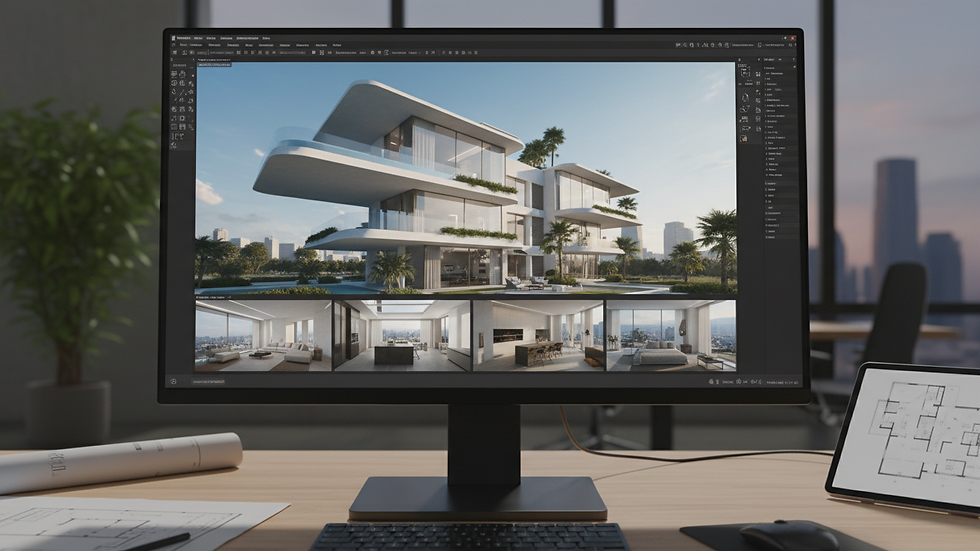
3D rendering in real estate refers to the creation of photorealistic images or animations of a property using computer-generated graphics. This technology allows developers and architects to visualize buildings, interiors, and landscapes in meticulous detail before any physical construction begins. The process involves transforming architectural plans and CAD models into lifelike representations that can be viewed from multiple angles and in various lighting conditions.
This technique is particularly valuable in presales because it provides a tangible preview of the final product. Buyers can explore the layout, assess the flow of spaces, and appreciate design elements that are otherwise difficult to convey through traditional methods. Moreover, 3D rendering supports interactive features such as virtual tours and augmented reality, further enhancing the buyer’s experience.
By integrating 3D rendering into the sales strategy, developers can present their projects with a level of sophistication and transparency that builds confidence and drives early commitments.
Practical Applications of 3D Rendering in Property Presales
The practical applications of 3D rendering in property presales are diverse and impactful. Here are some specific ways this technology is employed to maximize sales potential:
Virtual Showrooms: Developers create virtual environments where buyers can explore different units, floor plans, and interior designs from the comfort of their homes or sales offices.
Marketing Collateral: High-quality renderings are used in brochures, websites, and social media campaigns to attract and inform potential buyers.
Customization Previews: Buyers can visualize personalized options such as color schemes, furniture arrangements, and material finishes, making the purchase feel more tailored and personal.
Stakeholder Presentations: Architects and developers use 3D visuals to communicate project details to investors, regulatory bodies, and marketing teams, ensuring alignment and support.
Problem Identification: Early visualization helps identify design issues or spatial conflicts, allowing for timely adjustments that improve the final product.
These applications demonstrate how 3D rendering is not just a marketing gimmick but a fundamental component of the presales process that enhances clarity, engagement, and efficiency.

Integrating 3D Rendering into Your Sales Strategy
To fully leverage the advantages of 3D rendering, it is essential to integrate it thoughtfully into the sales strategy. Here are some actionable recommendations for real estate developers and architects:
Collaborate Early: Engage 3D visualization experts at the initial design stage to ensure renderings accurately reflect the project vision.
Focus on Realism: Prioritize photorealistic textures, lighting, and details to create immersive experiences that resonate with buyers.
Utilize Interactive Tools: Incorporate virtual tours and augmented reality to allow buyers to explore properties dynamically.
Tailor Content: Customize renderings to highlight unique selling points and address specific buyer concerns or preferences.
Train Sales Teams: Equip sales personnel with the knowledge and tools to use 3D visuals effectively during presentations and negotiations.
Measure Impact: Track how 3D rendering influences buyer engagement and sales conversion rates to refine your approach continuously.
By embedding 3D rendering into the core of the presales process, developers can create a compelling narrative around their projects that captivates and convinces potential buyers.
The Future of Property Presales with 3D Rendering
Looking ahead, the role of 3D rendering in property presales is poised to expand further, driven by advancements in AI, virtual reality, and automation. Studios like OI CG Studio in Hyderabad are pioneering this evolution by combining traditional real estate visualization with AI-powered creative solutions. This fusion promises not only more stunning visuals but also smarter workflows and personalized marketing strategies.
As technology progresses, buyers will expect increasingly immersive and interactive experiences that allow them to engage with properties on a deeper level. Developers who embrace these innovations will gain a competitive edge, accelerating sales and enhancing customer satisfaction.
In this context, investing in high-quality 3D rendering services is not merely an option but a necessity for those seeking to lead the market. The ability to present a property convincingly before it exists in the physical world transforms the presales process into a journey of discovery and anticipation.
For those interested in exploring how 3D visualization can elevate their projects, exploring 3d rendering for property presales offers a pathway to harnessing this powerful tool.
The integration of 3D rendering into property presales represents a paradigm shift in real estate marketing. It empowers developers and architects to tell their stories with clarity and creativity, bridging the gap between concept and reality. As this technology continues to mature, its role will only grow more central, shaping the future of how properties are sold and experienced.


Comments